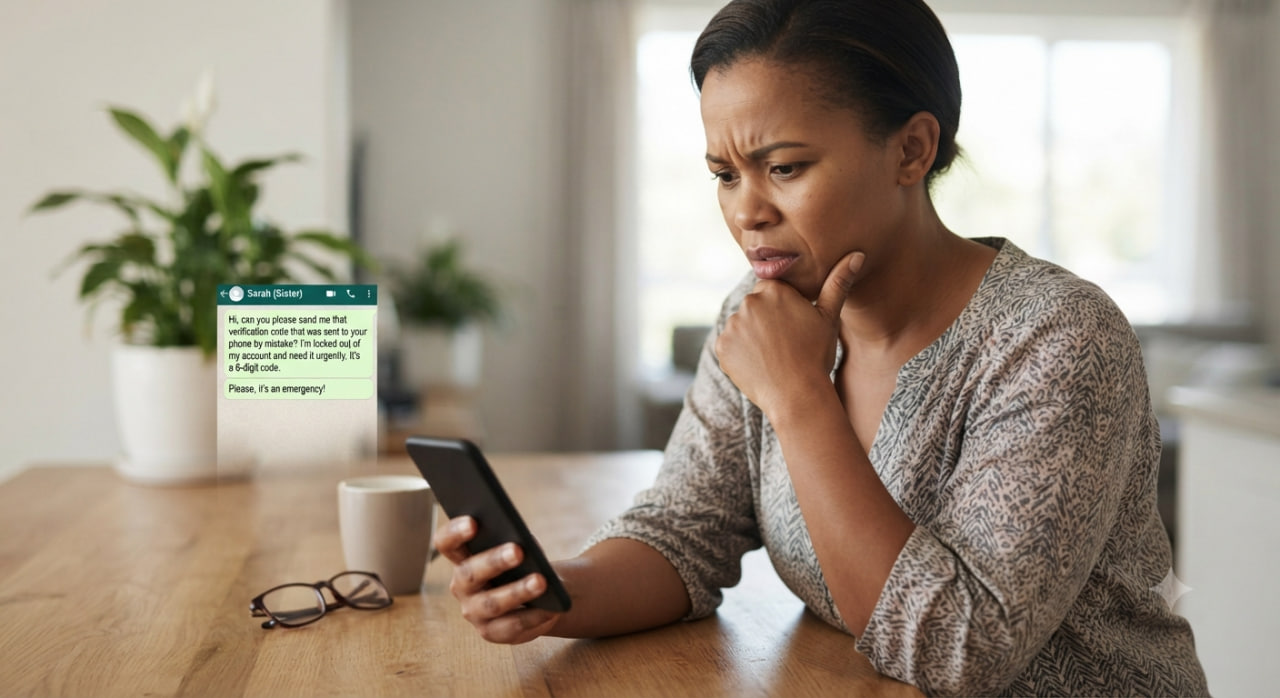
South Africans are being urged to remain cautious as WhatsApp scams continue to evolve, with criminals using increasingly convincing tactics to trick users into revealing personal information or handing over access to their accounts.
WhatsApp has become one of the most widely used communication platforms in South Africa, making it a popular target for scammers. Fraudsters often rely on trust, urgency and fear to convince victims to take action without questioning whether a message is genuine.
One common scam involves criminals pretending to be friends, family members or trusted contacts. After gaining access to a WhatsApp account, scammers may send messages asking contacts for money, claiming they are facing an emergency or need immediate financial assistance.
Another tactic involves scammers asking users to share a verification code sent to their cellphone. These codes are linked to account registration, and sharing them can allow criminals to gain control of a WhatsApp account.
Cybercriminals also use fake competition messages, delivery notifications and banking-related alerts to encourage people to click on suspicious links. These links may direct users to fake websites designed to collect personal details or login information.
Security experts have repeatedly advised users to be careful when receiving unexpected messages, even if they appear to come from someone they know. A simple phone call to confirm a request can prevent people from becoming victims of fraud.
WhatsApp users can take several steps to improve their account security. Enabling two-step verification adds an extra layer of protection by requiring an additional PIN when registering an account on a new device.
Users should also avoid sharing one-time passwords, verification codes or banking information with anyone. Legitimate companies and financial institutions will never ask customers to provide confidential security details through WhatsApp messages.
If someone’s WhatsApp account has been compromised, they should attempt to log back into their account using their phone number and alert their contacts that fraudulent messages may have been sent.
As online scams become more sophisticated, staying informed remains one of the strongest ways for South Africans to protect themselves. Taking simple security precautions can help prevent criminals from gaining access to personal information and finances.