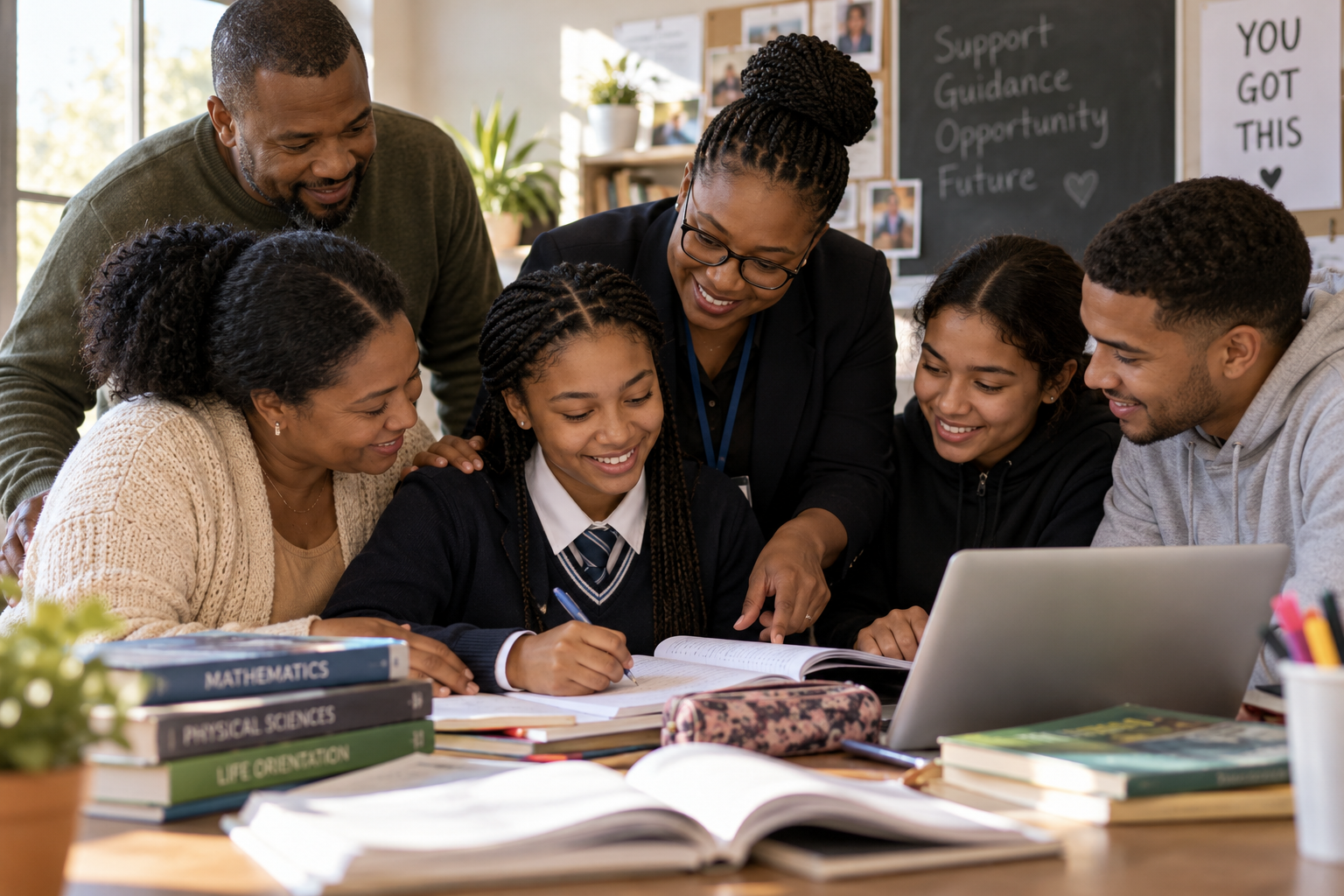
For Mia, getting through matric is about more than passing exams. It is about recognising how far she has come, appreciating those who stood by her and building a future on her own terms.
Asked what she is most proud of, Mia says: “With everything I’ve been through, I’m proud that I haven’t given up.”
Her answer reflects the determination behind her final year of school. Like many matriculants, Mia is facing exam pressure while thinking about what comes next.
Her journey also highlights an important point. Learners must take responsibility for their education, but they do not have to face every challenge alone.
As the Western Cape’s Class of 2026 sits for the National Senior Certificate (NSC) examinations, Mia’s experience shows the role families, teachers, tutors and communities can play. Their support can make a difference inside and outside the classroom.

A journey shaped by support
Mia identifies her mother, Megan Philander, as the person who has stood by her throughout her journey.
“My momma was the only one who supported me throughout my journey, spiritually, mentally and physically. Despite the hardships, she never gave up on me,” Mia says.
For Megan, supporting a matriculant means balancing guidance with independence. She has found practical ways to help Mia while giving her space to take charge of her education.
Sometimes, this means sending TikTok videos with study resources and revision tips rather than checking study schedules.
“I think it signals how my role has evolved,” Megan explains. “Rather than trying to manage every aspect, I’m finding practical ways to support her and give her the space to take ownership of her journey.”
As children grow up, the role of a parent changes. Support remains important, but young people also need space to make decisions and learn from their mistakes.
Megan says open communication has been central to their relationship. Their conversations sometimes begin with disagreements. However, working through these discussions helps them understand each other better.
She has also learned that supporting a child does not always mean fixing a problem.
“They must know they can seek guidance from you without fear or judgement,” she says.
For Megan, this means setting clear expectations while recognising that her daughter’s goals may differ from her own. It also means accepting that life does not always go to plan. Sometimes, finding another way forward matters more than reaching the original goal.

Perseverance through the difficult days
For Mia, determination does not mean never feeling overwhelmed. It means continuing to work towards her goals, even when she feels tired or discouraged.
She pushes herself to finish what needs to be done. Even when she feels tired or hopeless, she tries to find a way to meet her deadlines.
Listening to music helps her calm down. Talking about her feelings also gives her an outlet when things become difficult.
Her experience shows that perseverance does not mean learners never struggle. Sometimes, it means finding ways to manage difficult moments and tackling one task at a time.
Megan believes parents must also help young people develop discipline and perspective. She wants her daughter to achieve good results and have opportunities to study further. However, she does not believe marks and qualifications alone should define success.
“A setback does not have to define their future or your expectations of them,” she says.
Her advice to other parents is to encourage their children and listen to their concerns. She also urges them to help young people recognise the options available when things do not go to plan.
Parents can encourage hard work while still offering hope. One setback does not have to define a young person’s future.
When knowing the work is not enough
Support for learners extends beyond the home. Teachers and tutors help young people identify gaps in their knowledge, build confidence and develop the skills they need to succeed.
Sinazo Ndyameni, a Grade 12 teacher at Good Hope Seminary School, says her role goes beyond teaching the syllabus. She also helps learners develop discipline, commitment and self-belief. She wants them to understand how their choices can affect their futures.
For Ndyameni, this responsibility is difficult to put aside. Teachers also help shape learners’ characters and personalities.
“It is a responsibility that is difficult to put down because we help shape learners’ characters and personalities,” she explains.
However, circumstances outside the classroom can make it harder for learners to continue with school.
Ndyameni recalls a learner whose home was destroyed by fire. The learner received donations of food and clothing, as well as counselling and emotional support.
According to Ndyameni, this assistance helped the learner feel loved and cared for despite the circumstances. It also helped the learner continue with schoolwork and examinations.
The case shows how support can help a learner continue their education during a personal crisis.
Ndyameni also points to school support programmes, social workers, tutors, School Governing Body members and the wider community. These forms of support can help learners manage challenges at school and at home.
Helping learners apply what they know
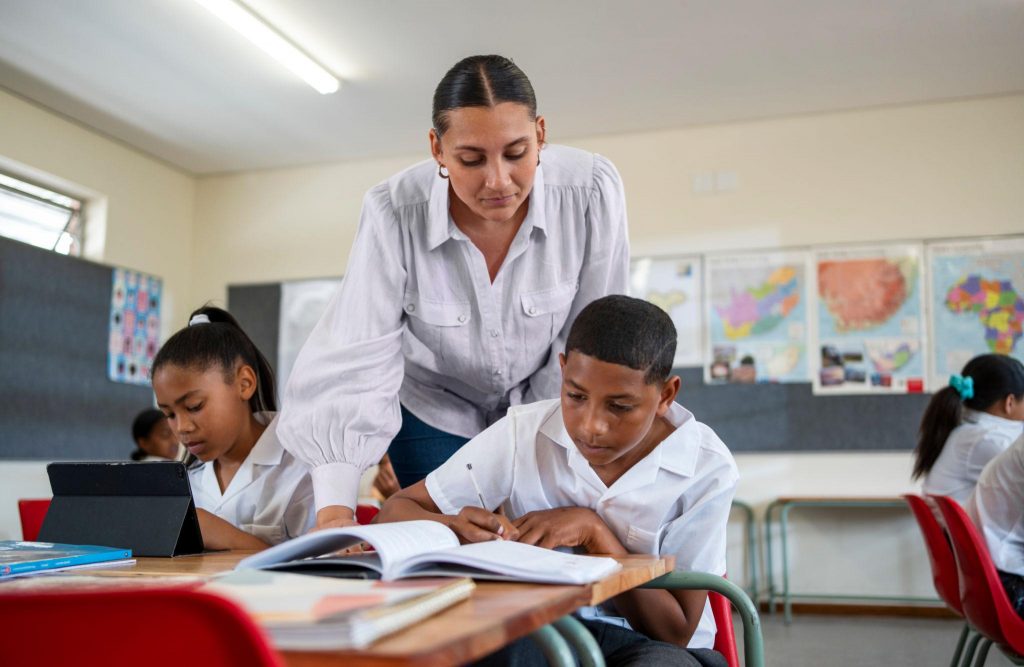
For mathematics tutor Cleo Arendse of Maestro Maths Tutoring, one challenge is helping learners turn their knowledge into exam answers.
Some learners understand mathematical concepts but struggle to apply them to questions. In Euclidean Geometry, for example, they may know the theorems but fail to identify which ones apply to a diagram.
Arendse teaches learners to look for specific properties, highlight relevant information and ask why certain details appear in a question.
She also stresses the value of practising past examination papers. This helps learners become familiar with the way questions are structured.
Based on her experience, Arendse believes schools could do more to provide consistent academic support. Options include extra classes and tutor hubs. She believes this support should begin before learners reach matric.
“Our schooling system has reached a point where every child should have a tutor or attend a school that offers consistent extra classes from Grade 8 to Grade 12. Getting through school without one isn’t impossible, but it can be challenging,” Arendse says.
For families who cannot afford private lessons, she suggests that schools and communities explore ways to make extra support more accessible.
Arendse believes parents, learners and educators must all play their part.
“Responsibility is shared by three parties: the parent, the learner and the educator. Everyone has a role to play.”
Her point is clear. Learners need to put in the work. Parents need to offer support, while educators must help learners understand and apply what they are taught.
Western Cape Matric Exams 2026: A Community Effort
This shared responsibility is especially important during the Western Cape Matric exams 2026.
In his message to the Class of 2026, Western Cape Minister of Education Jaco Londt announced that 71,302 full-time candidates and 13,834 part-time and repeat candidates would sit for the NSC examinations in the province.
Together, they make up 85,136 candidates.
The examinations began on 13 October 2026 and end on 25 November.
The province recorded an NSC pass rate of 88.2% in 2025, up from 86.6% in 2024.
These figures offer one measure of educational performance. However, the experiences of learners, parents, teachers and tutors reveal the work behind those results.
Londt has called on communities to create calm and peaceful environments for learners during the examination period. His message recognises the role of parents, guardians, teachers, tutors, school leaders and education officials.
Families can provide encouragement and stability. Educators can offer guidance and academic support. Communities can also help address barriers that make it harder for learners to focus on their studies.
Still, support does not remove a learner’s own responsibility. As Megan explains, the environment around a young person matters, but so do their determination and willingness to take ownership of their journey.
The challenge is finding the right balance. Parents and teachers must help without taking over. They should encourage learners without adding unnecessary pressure. Learners, in turn, must take responsibility for their choices while feeling safe enough to ask for help.
Looking beyond matric
Mia hopes to build a career in events, an industry she is passionate about. She wants to provide for herself rather than wait for a job opportunity to appear.
Instead, she hopes to use her skills to create opportunities and turn her ambitions into reality.
Megan shares this view. She wants her daughter to understand that effort, accountability and focus matter. At the same time, she knows there is more than one path towards a fulfilling future.
Mia encourages other learners to keep working towards their goals, even when school becomes difficult. She believes getting through school can help prepare young people for the demands of life beyond it.
As the Western Cape matric exams 2026 continue, Mia’s story highlights the roles that families, teachers and tutors can play in helping learners prepare for life beyond school. Their support matters, but so does the determination of the learner.
For Mia, the next chapter is about turning her passion into a future she can build for herself.
As she puts it, she hopes to “use the skills I have to make my dreams a reality.”