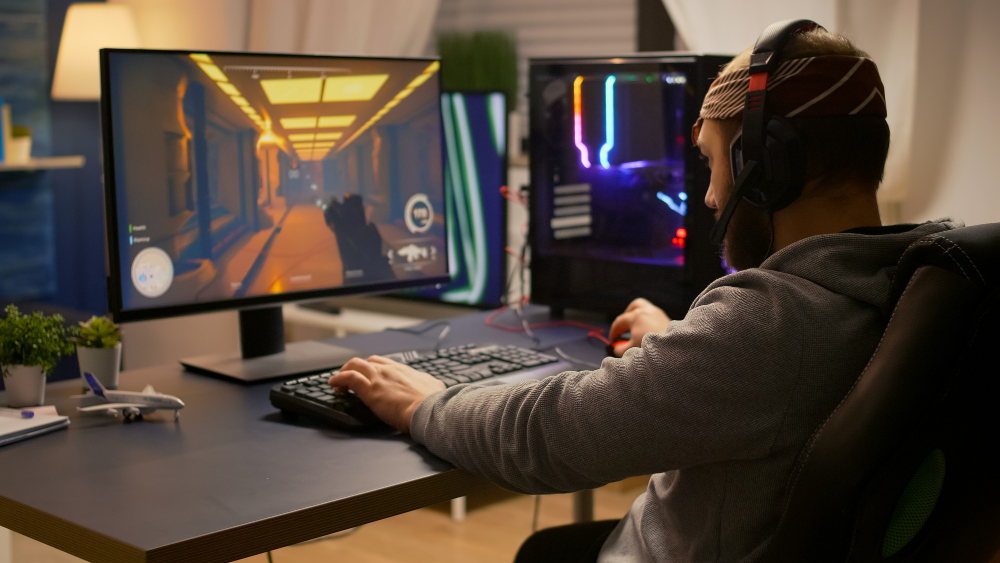
Across the globe, millions of people are undergoing intense cognitive training programmes, and most are unaware of it. Competitive gaming is quietly developing lightning-fast decision making, strategic thinking and teamwork, skills that companies spend fortunes trying to teach their executives.
Before you dismiss a six-hour gaming session as wasted time, consider this: neuroscientists see rapid-fire decisions, complex problem solving and hand-eye coordination that rival high-pressure professionals. Gamers are processing more information than a stock trader at peak hours. They track opponents, manage scarce resources, coordinate with teammates and make split-second decisions while someone is actively trying to outsmart them. To assume these skills are not transferable is shortsighted.
The benefits extend far beyond reflexes. Strategy games like League of Legends or StarCraft II sharpen foresight and adaptability, puzzle games foster creative problem solving, and team-based games such as FIFA, Call of Duty and Fortnite cultivate leadership and communication under pressure. Research from Dr Simone Kühn at the Max Planck Institute shows that gaming can even physically reshape the brain, increasing grey matter in areas responsible for planning, spatial awareness and motor skills.
Schools in South Africa are beginning to take notice. Esports programmes are uncovering hidden talents, transforming disengaged students into strategic thinkers and collaborative leaders. In the workplace, the skills honed in gaming map directly onto real-world demands. Fast-paced shooters train rapid decision-making under pressure, while strategy games develop strong project managers.
Modern gaming is far from antisocial. Players coordinate across continents, building cultural awareness and teamwork along the way. Local tournaments, like the MTN SHIFT Gaming Experience, bring thousands together, proving that gaming is as much about community as it is about competition. Professional gamers demonstrate remarkable discipline. They study data, analyse opponents and refine strategies, behaviours identical to executive-level planning. Perhaps most importantly, gaming normalises failure. Players lose, adapt and try again, developing resilience that carries into life beyond the screen.
As digital natives step into leadership roles, gaming achievements are increasingly being recognised as markers of persistence, adaptability and teamwork. Parents, educators and employers alike can view gaming not as wasted time, but as a platform for skill-building. The evidence is clear. Competitive gaming develops precisely the abilities our digital world demands. Next time you see someone gaming, do not ask how much time they have spent. Ask what skills they are mastering.