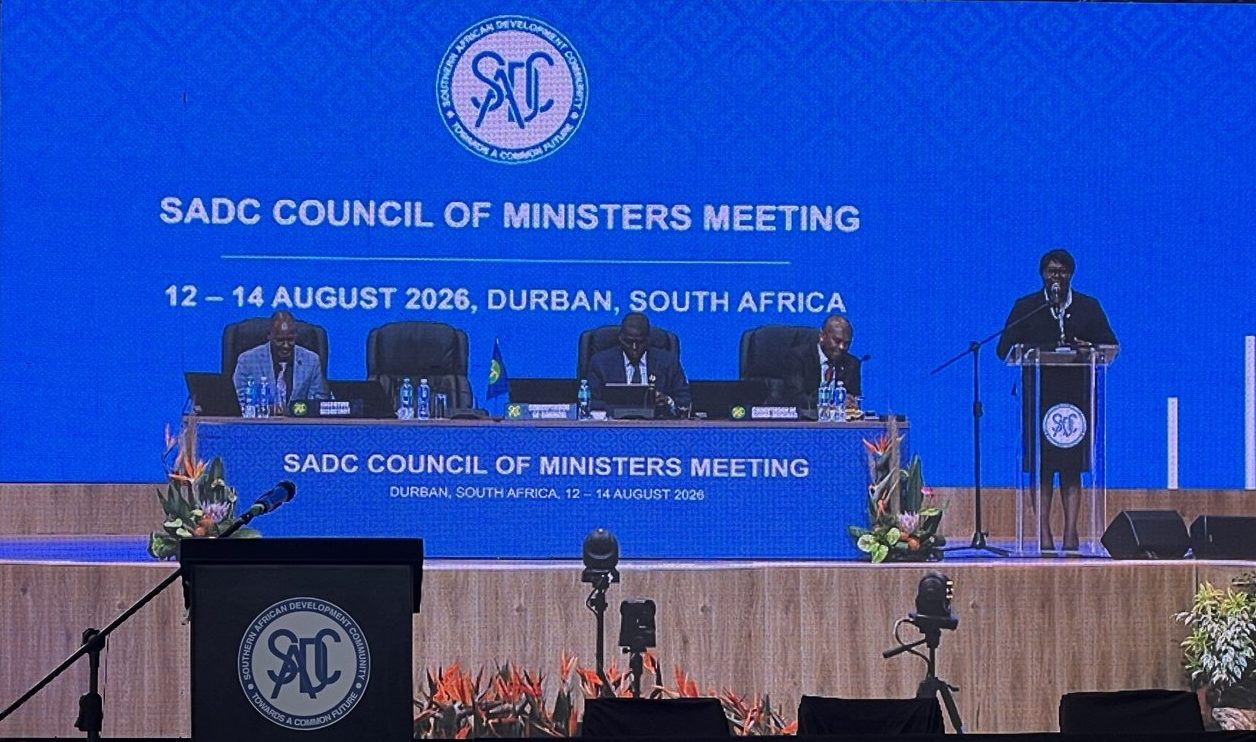
DURBAN, SOUTH AFRICA — In a symbolic transfer of regional leadership, Zimbabwe’s Minister of Foreign Affairs and International Trade, Professor Amon Murwira, officially handed over the chairpersonship of the Southern African Development Community (SADC) Council of Ministers to South Africa’s Minister of International Relations and Cooperation, Ronald Lamola.
The physical passing of the baton took place during a formal ceremony in Durban, signaling the start of South Africa’s chair tenure for the 2026–2027 period.
A Shared Regional Mandate
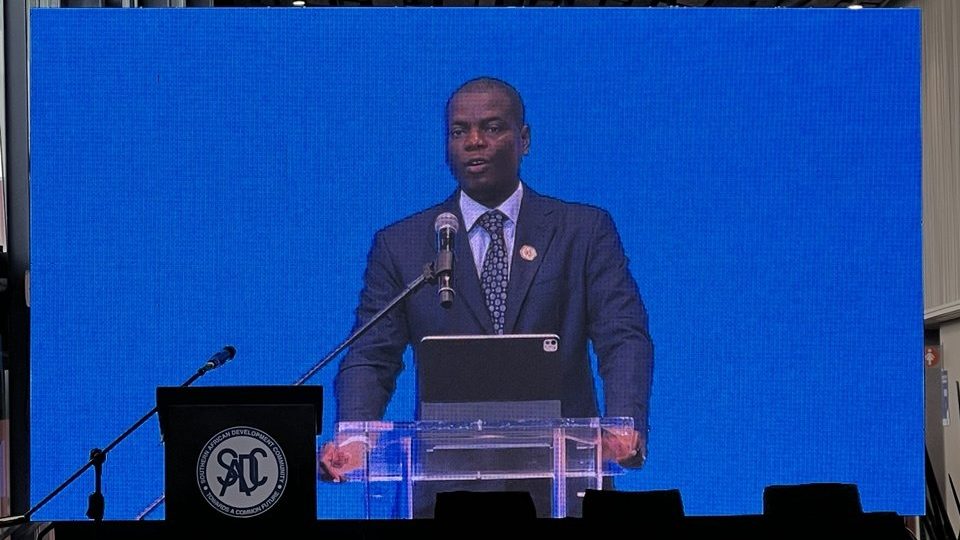
Accepting the leadership mantle, Minister Lamola emphasized that the SADC chairpersonship is a collective duty rather than a single nation’s office. Guided by principles of solidarity, unity, sovereign equality, and shared prosperity, Lamola expressed gratitude to Zimbabwe for its stewardship over the past year and welcomed incoming Vice-Chair Zambia—represented by Foreign Minister Mulambo Haimbe—to ensure smooth continuity during the transition.
The selection of Durban for the handover holds historical resonance. In his acceptance remarks, Lamola invoked the legacy of Chief Albert Luthuli, whose life embodied the interconnected struggle and history of Southern Africa. He noted Durban’s standing as a diplomatic landmark, having previously hosted the 2001 World Conference Against Racism and the landmark 2002 launch of the African Union.
Strategic Priorities for 2026–2027
Outlining the key pillars of South Africa’s SADC chairpersonship, the incoming Chair detailed several strategic priorities aimed at driving regional growth and resilience:
- Peace, Security, and Stability: Reaffirming that the security of any single member state is inextricably linked to collective regional stability.
- Industrialization & Value Addition: Driving economic self-reliance through agricultural transformation and critical mineral beneficiation. The SADC region holds nearly 30% of global proven critical mineral reserves, yet intra-regional trade currently hovers around 20%, a figure far below capacity. The African Export-Import Bank (Afreximbank) estimates untapped intra-Africa trade potential for the region at $53 billion.
- Infrastructure Modernization: Expanding and modernizing regional energy, transport corridors, digital networks, ports, and water infrastructure as an essential prerequisite for large-scale manufacturing and job creation.
- Social Development: Sustaining targeted investments in gender equality, climate resilience, disaster risk management, and youth empowerment.
Demographics and the Imperative for Change
Addressing the region’s demographic landscape, Lamola stressed the urgency of economic delivery. With a median age of 19 across the continent and nearly 60% of the population under 25, one in four young people globally will be African by 2030.
“It cannot be business as usual,” Lamola noted, highlighting that regional economic expansion and job creation must aggressively match this population reality.
Addressing Human Mobility and Migration
The speech also directly confronted the ongoing public debates within South Africa regarding irregular migration, border integrity, and pressure on public institutions.
While taking a firm stance rejecting xenophobia and human rights violations, the Chair framed human mobility as an economic and social dynamic requiring a lawful, coordinated regional response. Lamola concluded by recalling that South Africa’s own industrial trajectory historically profited from regional labor mobility, reinforcing the need for balanced, cooperative regional policy moving forward.