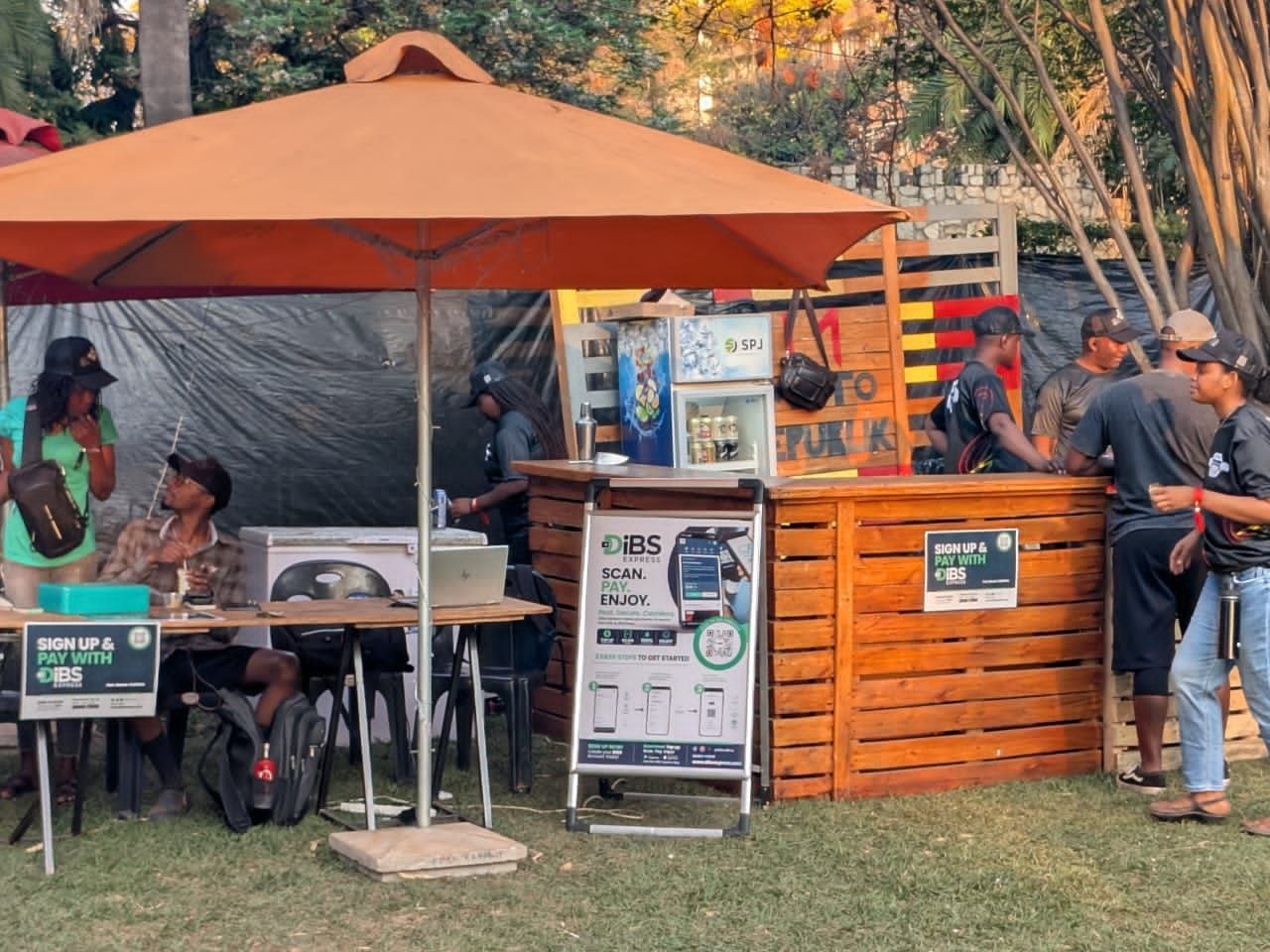
Zimbabwe’s biggest urban culture gathering had a fintech twist this year. At Shoko Festival, three days of music, comedy, poetry and art that draws crowds from across the region into Harare. Festival-goers found a new way to pay for food, drinks and merchandise: no cash, no card machine, just a phone and a QR code.
The experience came courtesy of Dibs Express, the payments arm of Zimbabwean fintech group Dibs Africa, which used the festival to introduce something new alongside its now-familiar QR system: a physical Dibs card that works like an ordinary bank card, giving users a reliable option whenever mobile networks get congested, a common frustration at any large, crowded event. To keep things seamless, Dibs Express offered a free hotspot at its booth, one more reason for festival-goers to stop by and sign up, and worked with Shoko organisers Magamba to build the payment experience into the festival’s vendor spaces.
“We are not trying to change how people enjoy events; we are trying to remove the friction around them,” says Isheanesu Makambira, founder of Dibs Africa. “If paying becomes something you barely have to think about, then we have done our job.”
It’s a quiet but deliberate moment for a company that has spent much of the year testing its technology at smaller events, including a weekly slot at Moto Republik, before stepping onto a stage the size of Shoko. Dibs Africa was also active at the Otakukon anime convention, picking up new sign-ups there too, and the team says more festival and event appearances are already locked in for the months ahead.
That steady build-up is by design. Payments are just one part of what’s coming from Dibs Africa, which the group says has several other products in development it isn’t ready to unveil just yet.
As the country’s events calendar builds toward a typically busy December, Dibs Africa is positioning its technology as infrastructure any organiser can plug into, rather than something built from scratch each time. For a continent whose fintech headlines usually come out of Lagos or Nairobi, it’s a reminder that some of the more interesting experiments in cashless culture are happening quietly, in a festival field in Harare.