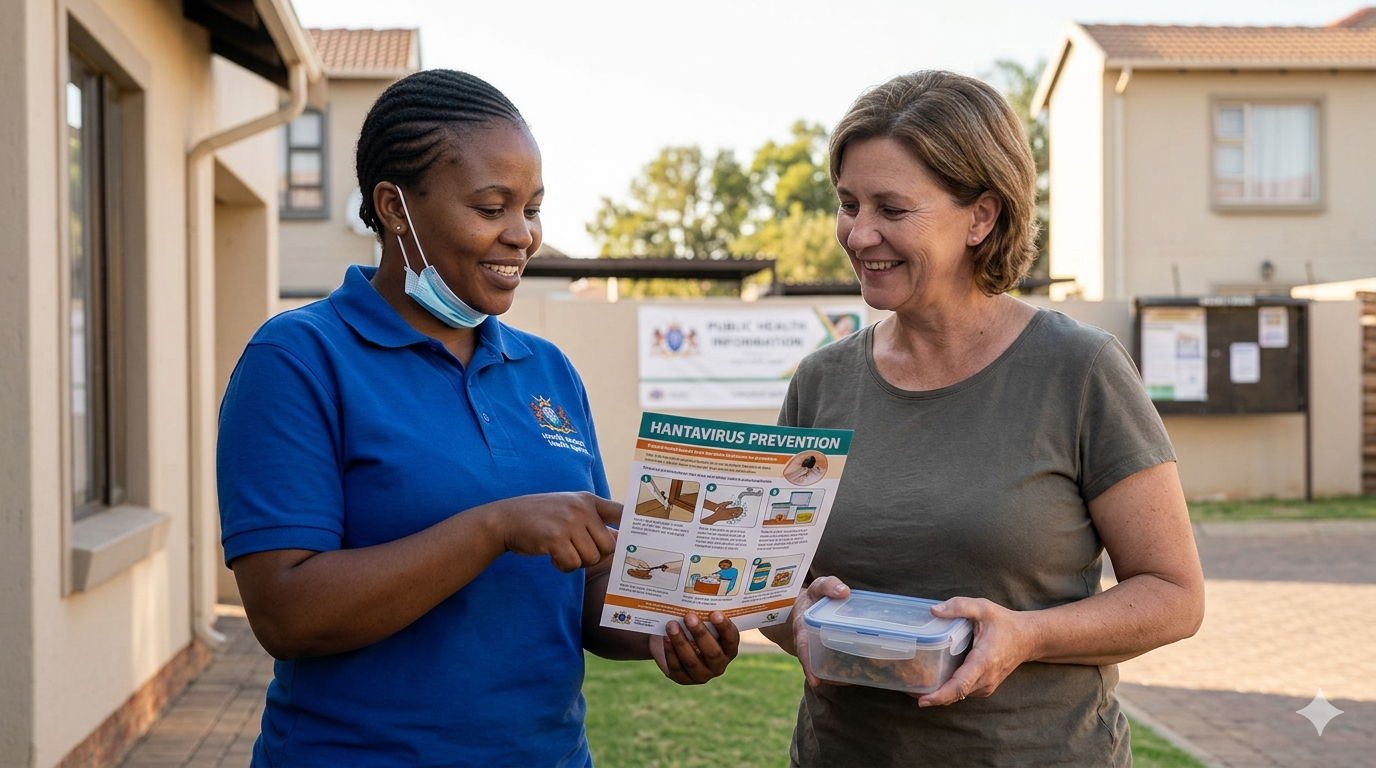
Public interest in Hantavirus has risen sharply in South Africa this week following confirmed cases linked to patients admitted in Gauteng. Health authorities have moved quickly to manage the situation, while reassuring the public that the overall risk remains low.
The National Institute for Communicable Diseases has been central to the response, working alongside provincial health teams to trace contacts and monitor the situation.
Reported Cases in Gauteng Under Investigation
The current concern stems from two patients who were admitted to a Gauteng hospital after arriving from a cruise ship. Health officials have confirmed that the cases are considered imported rather than locally acquired.
Authorities have further indicated that there is currently no evidence suggesting sustained local transmission of the virus within South Africa.
The National Institute for Communicable Diseases has reassured the public that surveillance systems are active and that the situation is being closely monitored.
What Is Hantavirus?
Hantavirus is a rare viral infection typically spread through contact with infected rodents, particularly through exposure to their urine, droppings, or saliva.
Human infection can occur when contaminated particles become airborne and are inhaled, most often in enclosed or poorly ventilated spaces.
While cases are uncommon, Hantavirus infections can become serious if not treated early.
Symptoms to Watch For
Early symptoms of Hantavirus infection can resemble common flu-like illnesses, which can delay diagnosis.
Key symptoms include:
- High fever and muscle aches
- Fatigue and dizziness
- Chills
- Nausea, vomiting, or abdominal discomfort
In more severe cases, individuals may develop sudden shortness of breath, which requires urgent medical attention.
Health experts stress that anyone who may have been exposed in a high-risk environment and develops these symptoms should seek medical care immediately.
How to Reduce the Risk of Infection
Although the risk of transmission in South Africa is currently considered low, health authorities recommend basic preventative measures to reduce exposure to rodents:
- Seal gaps and cracks in homes to prevent rodent entry
- Store food, including pet food, in sealed containers
- Use disinfectant when cleaning areas where rodents may have been present
- Avoid sweeping or vacuuming droppings, which may spread contaminated particles into the air
Proper hygiene and environmental control remain the most effective ways to prevent rodent-borne infections.
Health authorities have urged the public to remain informed without panicking, emphasising that Hantavirus infections remain rare and that the risk to the general population is currently considered low.