South African motorists are once again bracing for higher fuel costs as global oil volatility and domestic tax adjustments continue to push petrol and diesel prices upward in 2026. The latest increases have intensified concerns about inflation, household affordability and transport costs across the country.
Sharp Fuel Price Increases in May
On 6 May 2026, the Department of Mineral and Petroleum Resources implemented significant fuel price increases that immediately affected consumers nationwide.
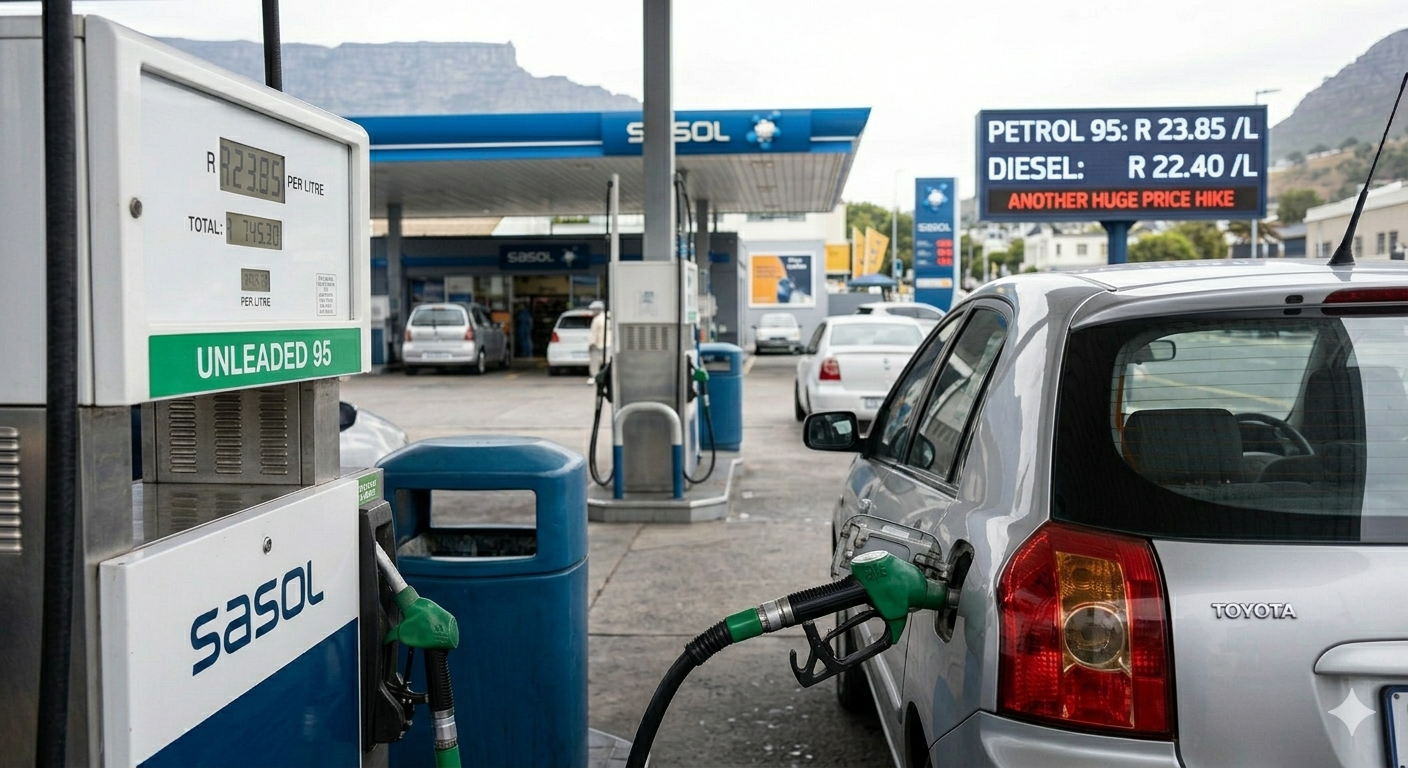
Petrol 93 and 95 rose by R3.27 per litre, while diesel (0.05% sulphur) increased by R6.19 per litre.
The adjustments were largely driven by a sharp rise in global oil prices following geopolitical tensions and supply chain disruptions, including heightened concerns around key shipping routes such as the Strait of Hormuz.
Brent crude briefly climbed above $100 per barrel during the period, placing sustained pressure on international fuel product prices.
Although the rand remained relatively stable at around R16.65 to the US dollar, it was not strong enough to absorb the global cost surge.
June Outlook: Further Increases Expected
Early data from the Central Energy Fund (CEF) indicates that fuel prices are likely to remain under pressure into June 2026, despite some stabilisation in international oil markets.
A key domestic factor contributing to the outlook is the gradual reversal of emergency fuel levy relief introduced by National Treasury. The relief previously reduced fuel costs by R3.00 per litre for petrol and R3.93 per litre for diesel.
From June, part of this support is being withdrawn, effectively increasing the tax component of fuel pricing once again.
Projected Pump Prices After June Adjustment
Based on current under-recoveries and expected tax changes, inland motorists could see petrol prices move closer to the R29 per litre mark.
Petrol 95, which currently averages around R26.50 per litre inland, is expected to rise by approximately R2.34 to R2.38 per litre. This would place the projected price in the region of R28.80 to R28.90 per litre.
Petrol 93 is expected to follow a similar trajectory, with projected inland prices ranging between R28.40 and R28.60 per litre.
Diesel prices are expected to remain elevated, although movements are likely to be more modest. With current inland prices around R32.00 per litre, diesel could increase slightly to approximately R32.30 to R32.40 per litre, depending on final international price movements.
While some easing in global diesel demand has been observed, the reintroduction of fuel levies is expected to limit any meaningful relief at the pump.
Economic Pressure Builds for Households and Industry
The sustained rise in fuel prices is expected to have wider economic consequences, particularly through increased transport and logistics costs.
Economists warn that higher fuel costs are likely to filter through into food prices, retail goods and public transport fares, adding further pressure to already strained household budgets.
Prices above R28 per litre for petrol and R32 per litre for diesel are widely viewed as a key threshold where inflationary effects become more pronounced in the broader economy.
A Persistent Cost-of-Living Challenge
Fuel remains one of the most sensitive economic indicators in South Africa, with price movements closely tied to both global market conditions and domestic fiscal decisions.
With ongoing uncertainty in global oil markets and shifting government policy on fuel taxation, analysts caution that further volatility at the pump cannot be ruled out in the months ahead.
For now, motorists are left navigating yet another cycle of rising fuel costs, with little immediate relief in sight.