The Santa Shoebox Project (SSP) is celebrating its 20th anniversary by inviting schools and Early Childhood Development (ECD) centres across South Africa to apply as beneficiaries for the 2026 campaign.
Since its launch in 2006, the initiative has delivered more than 1.35 million personalised shoeboxes to vulnerable children across the country. Beyond gift distribution, the project also channels donor funding into long-term developmental support, including the refurbishment of rural ECD centres, the installation of reading corners, and the provision of teacher training aimed at improving early childhood education outcomes.
The organisation says its mission is becoming increasingly urgent in the context of South Africa’s deepening inequality, where an estimated six out of ten children live below the poverty line. Speaking on the initiative’s impact, CEO Deb Zelezniak referenced findings from the G20 Global Inequality Report, which highlights the stark disparity in educational opportunity, noting that children from wealthier households have a significantly higher likelihood of accessing tertiary education compared to those from impoverished backgrounds.
Zelezniak said early childhood intervention remains critical in addressing these inequalities, pointing out that approximately 8.8 million children in rural communities rely on ECD centres that often operate with limited resources. She added that quality early education is one of the most effective ways to break cycles of intergenerational poverty and improve long-term life outcomes.
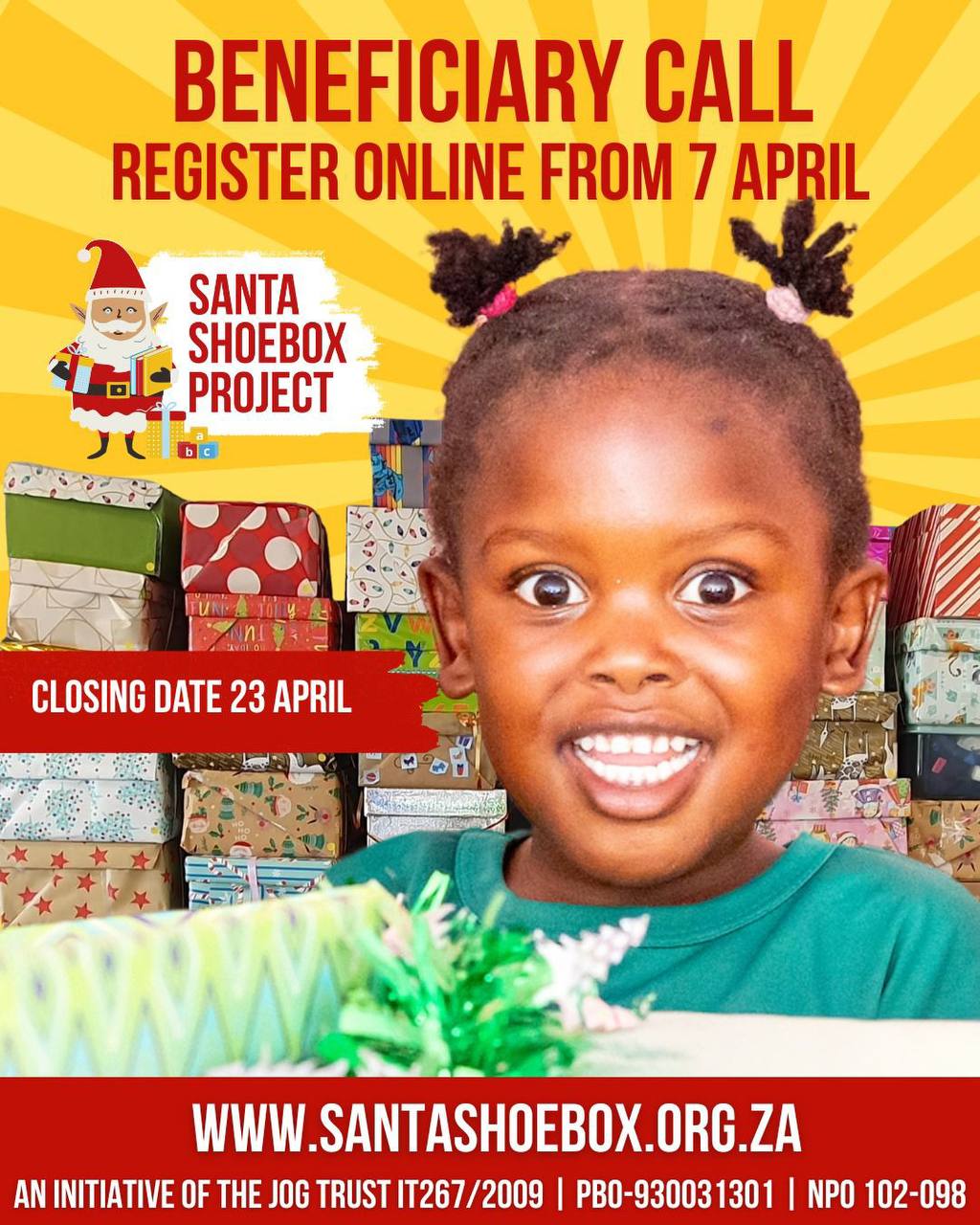
Applications for the 2026 beneficiary cycle will open from Tuesday, 7 April to Thursday, 23 April, with schools and ECD centres required to register or update their profiles on santashoebox.org.za before submitting an online application. The organisation confirmed that incomplete applications will not be considered and that successful applicants will be notified via SMS by mid-June.
To improve their chances of selection, facilities must meet specific criteria, including the submission of accurate class rosters containing learner names, ages, and clothing sizes to ensure personalised shoebox distribution. Priority will be given to Pre-school, Grade R, Grade 7, and Grade 11 learners, as well as under-resourced rural communities and first-time beneficiary schools. The organisation also emphasised that schools must ensure the safe distribution of shoeboxes to learners and should not be receiving similar support from other NGOs during the same period.
The project also confirmed that, from 2026 onward, it will focus exclusively on South African beneficiaries following the conclusion of its distribution programmes in Namibia.
Alongside beneficiary applications, the organisation is encouraging members of the public to get involved as volunteers, donors, or supporters. CEO Deb Zelezniak said the shoeboxes provide essential items that many families cannot afford, while also ensuring that children feel recognised and valued. She added that participation in the project represents part of a 20-year legacy aimed at restoring dignity and improving early childhood development outcomes across South Africa.