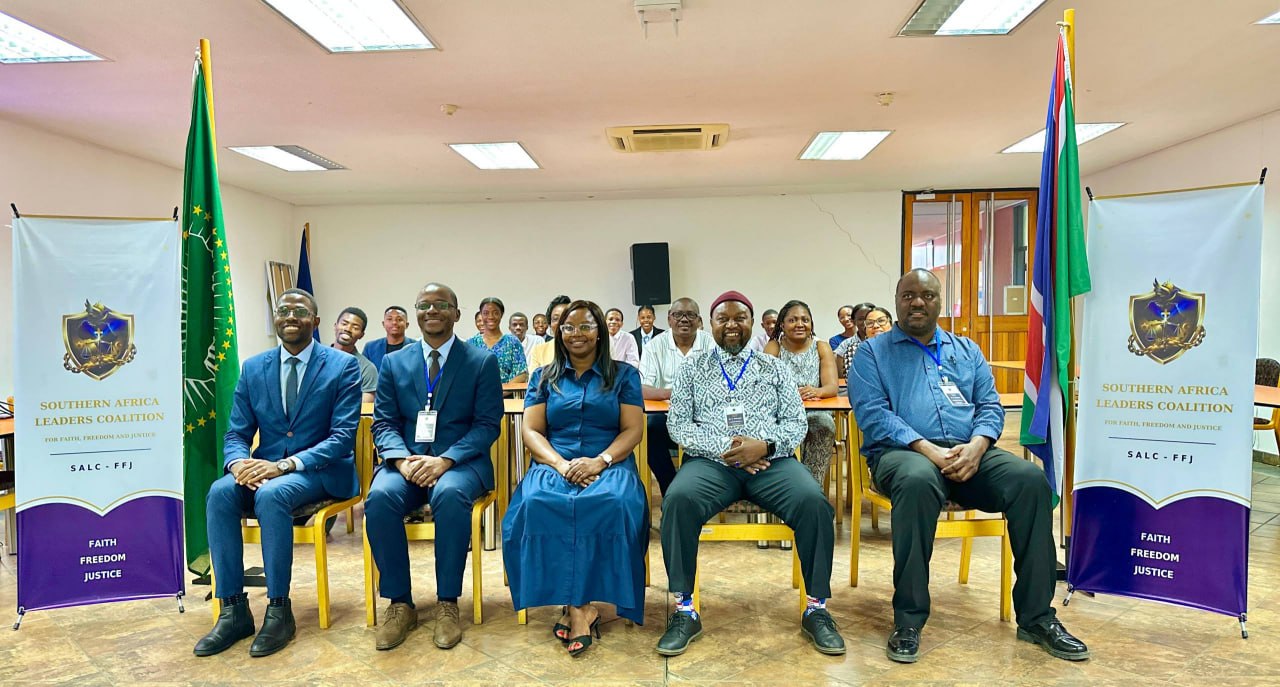
The Southern African Leaders Coalition for Faith, Freedom and Justice (SALC-FFJ) – Namibia hosted a human rights panel discussion at the NUST Hotel School in Windhoek, placing human dignity, proportionality and the protection of vulnerable remand detainees at the centre of the conversation.
Held under the theme “Upholding Human Dignity and the Rights of Remand Detainees: A Local, Regional and International Human Rights Perspective,” the discussion examined remand or pre-trial detention from Namibian, regional and international perspectives. It highlighted the importance of ensuring that people awaiting trial are treated fairly and remain protected by the principle of presumption of innocence until proven guilty.
From the Namibian perspective, panelists considered existing systems protecting remand detainees, challenges in their implementation and opportunities to strengthen oversight. The discussion also considered appropriate alternatives to detention, particularly when dealing with vulnerable individuals.
From a regional African perspective, the panel highlighted that similar remand-detention challenges exist across different countries. Participants emphasised that public awareness, responsible media coverage and civil-society advocacy can help bring attention to human-rights concerns and encourage greater accountability.
Internationally, attention was placed on proportionality and the treatment of juveniles, elderly people and other vulnerable detainees. The panel considered alternatives to custodial detention where appropriate, alongside humanitarian considerations and respect for human dignity.
The psychological impact of prolonged detention was also highlighted, particularly the possibility of worsening existing mental-health challenges or contributing to additional psychological distress.
Building on these local, regional and international perspectives, the discussion then considered how these human-rights principles apply in practice. An international case involving Chairman Man Hee Lee, an elderly Korean War veteran, founder of Heavenly Culture, World Peace, Restoration of Light (HWPL) and religious leader of the Shincheonji Church of Jesus, was presented to the panel for consideration.
Dr. Christian Harris, a legal academic and Lecturer in Public and Procedural Law at the University of Namibia (UNAM), approached the case from the perspective of balancing the legal process with human-rights and humanitarian considerations. Without commenting on the merits of the case itself, he highlighted Chairman Lee’s advanced age and stressed that human dignity and proportionality should remain important considerations in determining appropriate legal measures.
The discussion also considered whether alternative forms of custody could adequately serve the interests of justice while protecting the dignity and well-being of elderly and vulnerable detainees.
Dr. Armas Shikongo, a psychology academic at the University of Namibia (UNAM), stressed the importance of first establishing the facts and seeking the truth before reaching conclusions or deciding what position to support.
In this way, the international case provided a practical point of reflection on the broader issues raised throughout the Namibia panel discussion — particularly presumption of innocence, proportionality, vulnerability and human dignity.
The dialogue ultimately reinforced one central message: upholding the rule of law and protecting human dignity should not be competing objectives. Justice should pursue accountability while ensuring that the rights and humanity of every individual are respected.