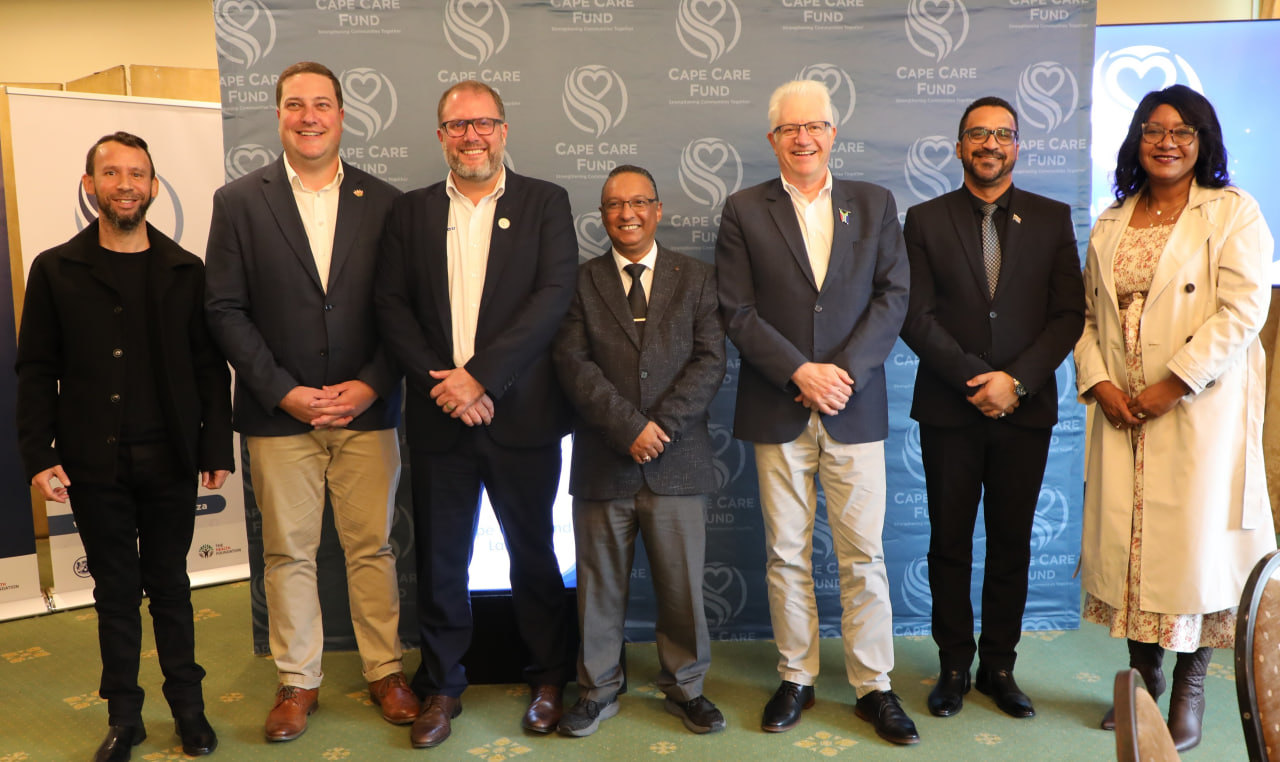
Amid growing financial strain on South Africa’s non-profit sector, a new funding initiative in the Western Cape hopes to turn the tide. The Cape Care Fund, launched on Friday, 6 June 2025, is a joint effort between the Western Cape Department of Social Development (DSD) and The Health Foundation of South Africa (THF) aimed at bolstering the sustainability and reach of social service organisations in the province.
The initiative comes in response to the stark reality that many NGOs and NPOs, vital to community well-being, have either shut down or are at risk due to dwindling state transfers and donor support post-COVID-19. Over the last three financial years alone, the Western Cape has seen the closure of 12 child protection branches, 3 homes for older persons, 18 community centres for seniors, and 4 Child and Youth Care Centres due to budget constraints.
Western Cape Minister of Social Development, Jaco Londt, said the fund is intended to take organisations “from surviving to thriving.” “When I stepped into office last year, one of the first things I did was ask the Department of Social Development to do everything possible to strengthen support to this vital sector,” said Londt. “We are hopeful the Cape Care Fund will benefit our most vulnerable residents.”
The fund is managed through a Special Purpose Vehicle overseen by THF and will channel support into compliant, registered, and well-functioning NGOs with a proven track record of quality service delivery. However, the initiative isn’t limited to established organisations. In an interview following the launch, Minister Londt confirmed that start-ups and emerging NGOs are not excluded.
“We’ve got an NPO help desk that actually walks this journey with people to register themselves and to show them how to draw up a business plan, what’s the reporting,” Londt said. “So it doesn’t matter whether your NPO/NGO is 100 years old or 4 months old, we want to walk a journey with people that have a heart for our communities.”
Londt emphasised that there are no single “priority areas” for the fund, stating that every social development sector is critical. “Whether you work with children in foster care, victims of GBV, people living with disabilities, the elderly, or those dealing with substance abuse, every sector is important,” he said. “It would be grossly unfair to prioritise one above another.”
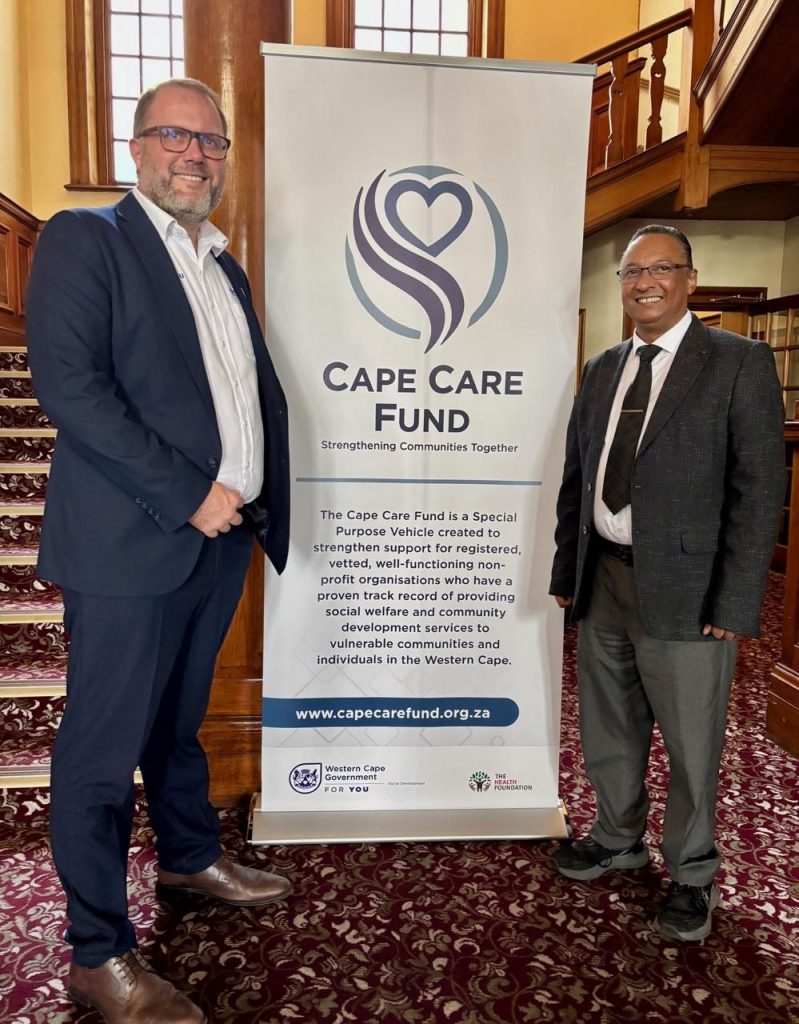
THF CEO Harry Grainger echoed this sentiment, highlighting the power of partnerships in navigating complex societal challenges. “The Cape Care Fund exemplifies how innovative financing and strategic collaboration can contribute to improved economic resilience and sustainable development,” he said during the launch.
Speaking to reporters, Grainger also explained how the partnership came to be: “We’ve been working on and off with DSD through child protection, because I serve on the boards of two organisations that receive DSD funding. When the department came to us with the idea of the Cape Care Fund, and we explained our protocols and governance processes, it immediately aligned.”
Grainger added that the fund has the potential to serve as a model for other provinces: “The Western Cape is often where programs are tested first, and we’re willing to work with any other province that wants to adopt this approach. We’re already active in Gauteng, and we see this as part of a national effort to strengthen social support systems.”
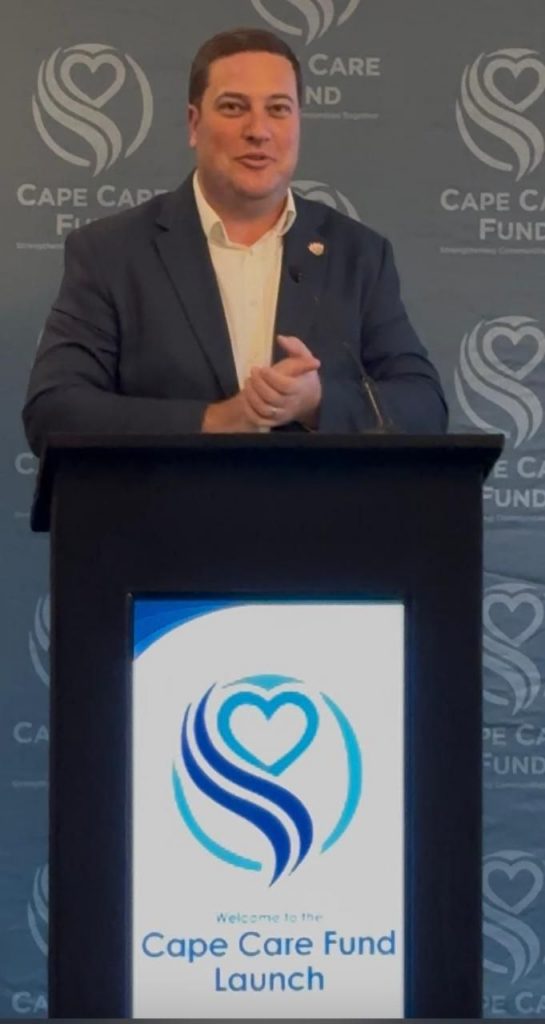
The launch event in Cape Town was attended by high-level officials including Premier Alan Winde, Cape Town Mayor Geordin Hill-Lewis, Western Cape Minister of Infrastructure Tertuis Simmers, and Deputy Speaker of the Provincial Parliament Reagen Allen.
Premier Winde praised the Cape Care Fund as a model of public-private collaboration: “We do not face challenges alone. The Cape Care Fund is the perfect example of the power of partnerships.”
For more information about the fund and how to get involved, visit www.capecarefund.org.za.